
A confluence of Elements
Exhibition at the Rye Art Gallery
East Sussex
28th May - 28th June 2026
Artists - Russell Burden and Melvyn Evans
with photographs by Terry Hulf and film by Kit Warren
A full selection of Russells Burden’s work and Kit Warrens’ film
‘Uncertain Boundaries’ can be viewed by following this link.
Terry Hulf’s photograph can be viewed on his website by following this link
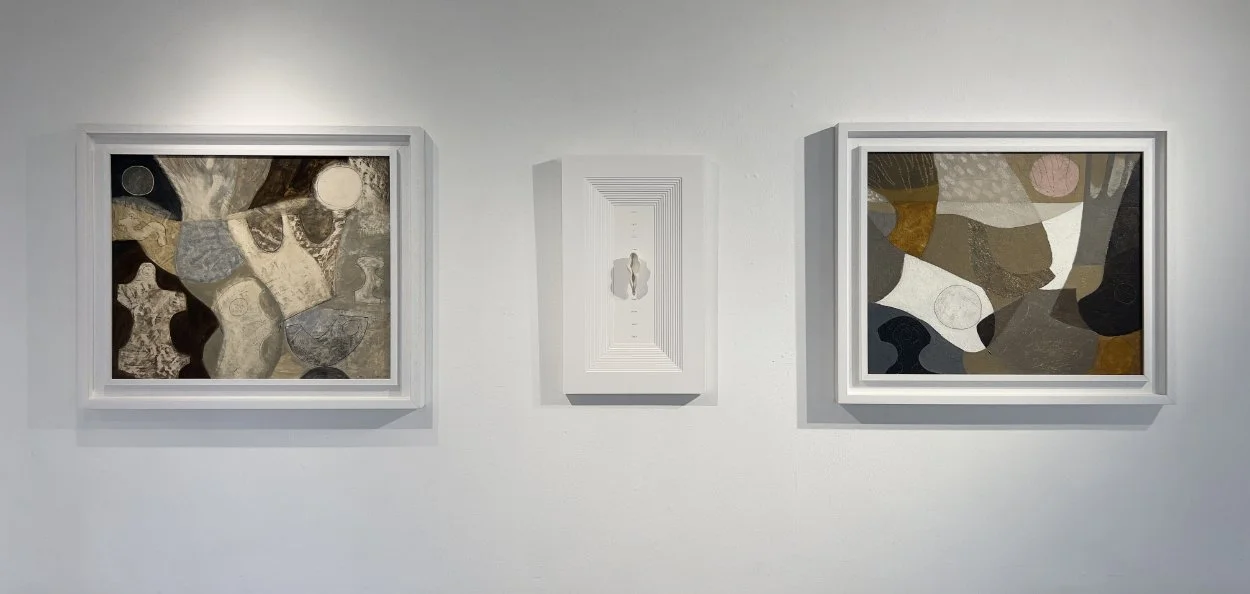
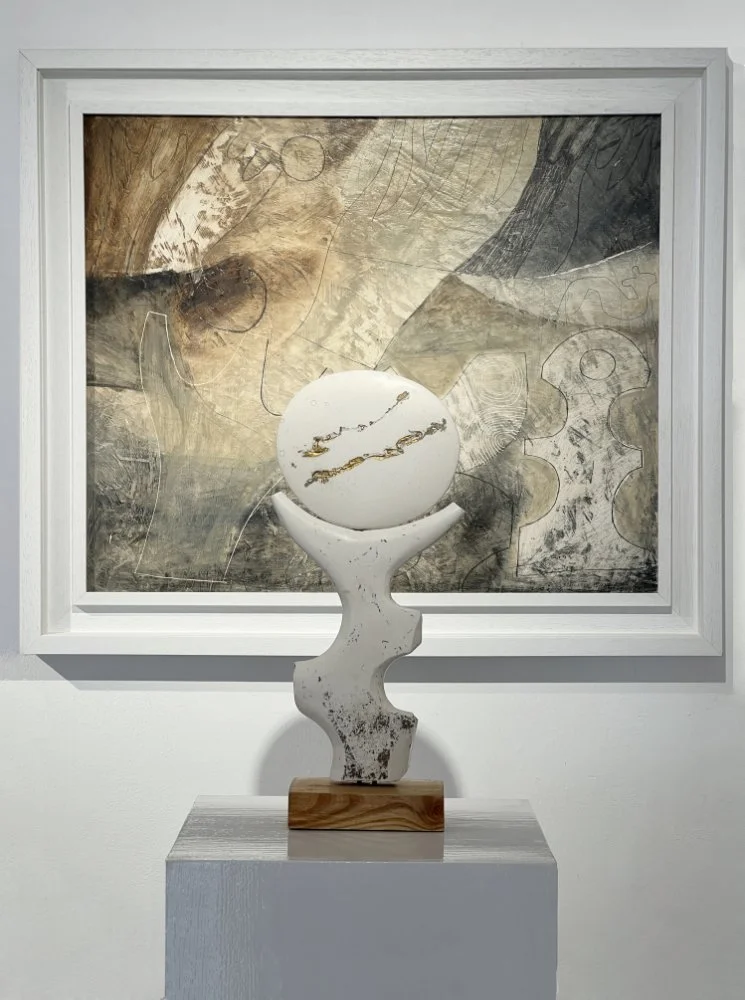
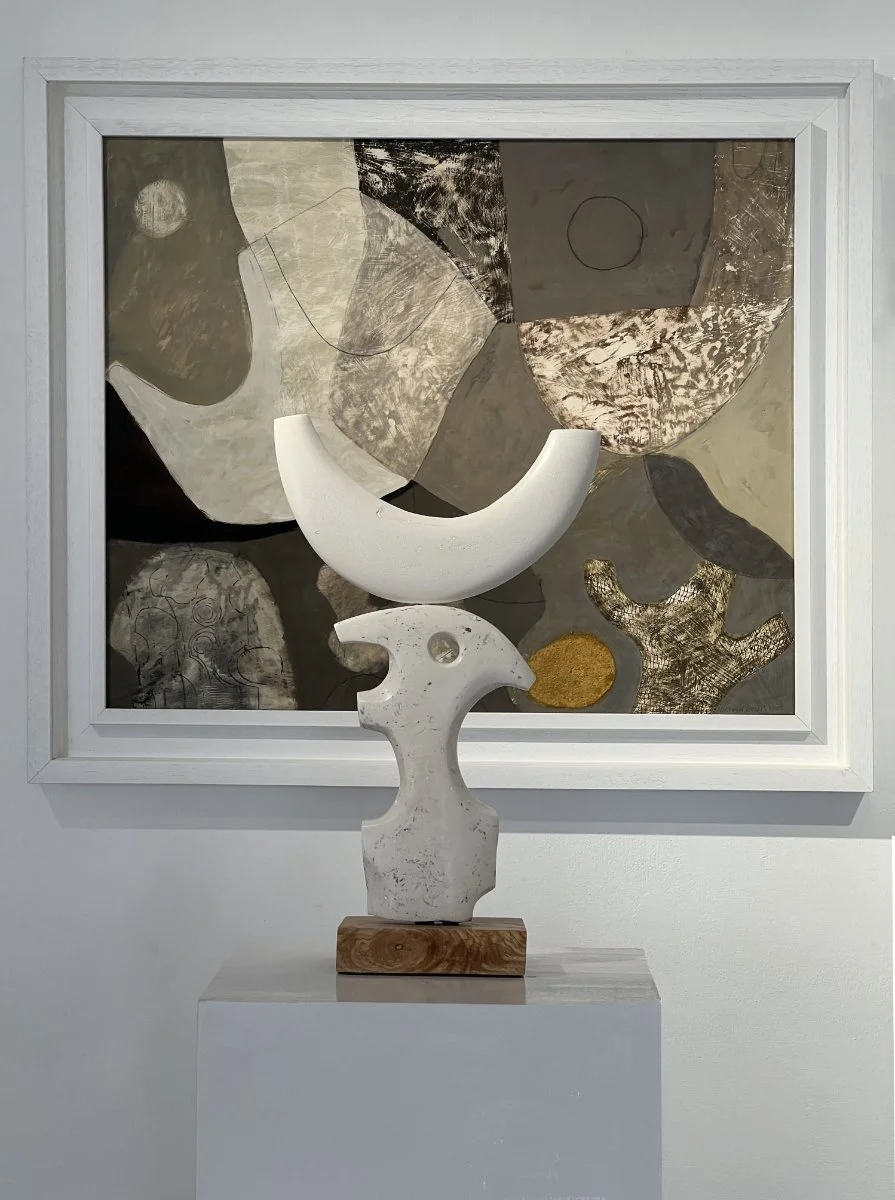
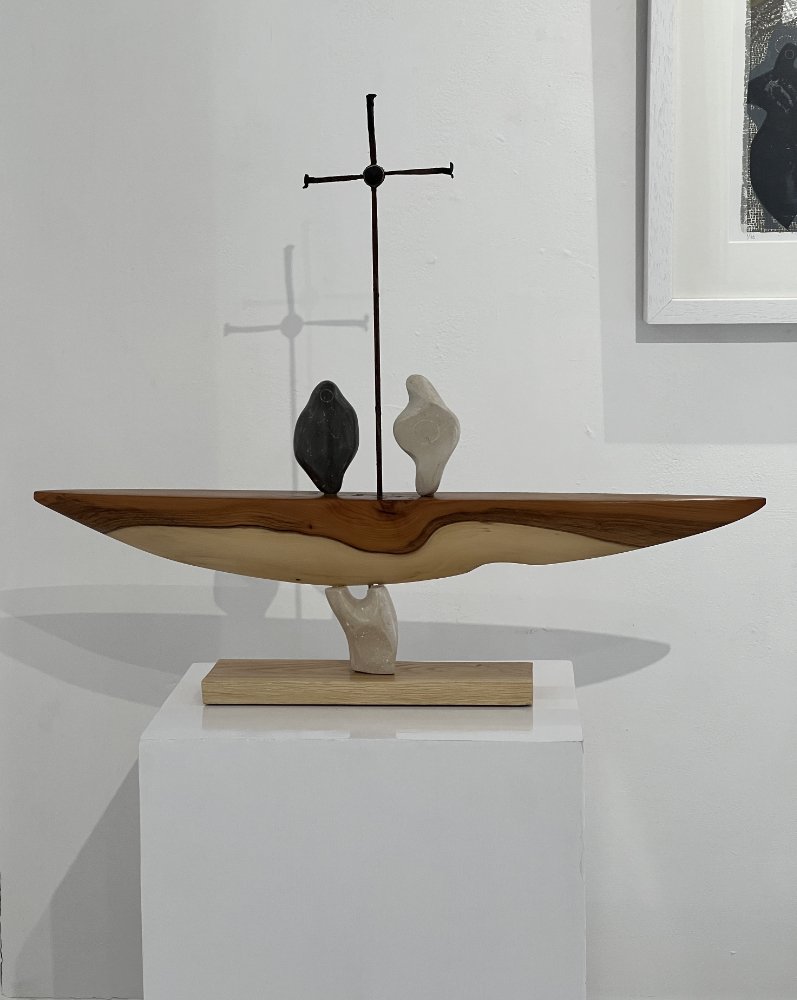
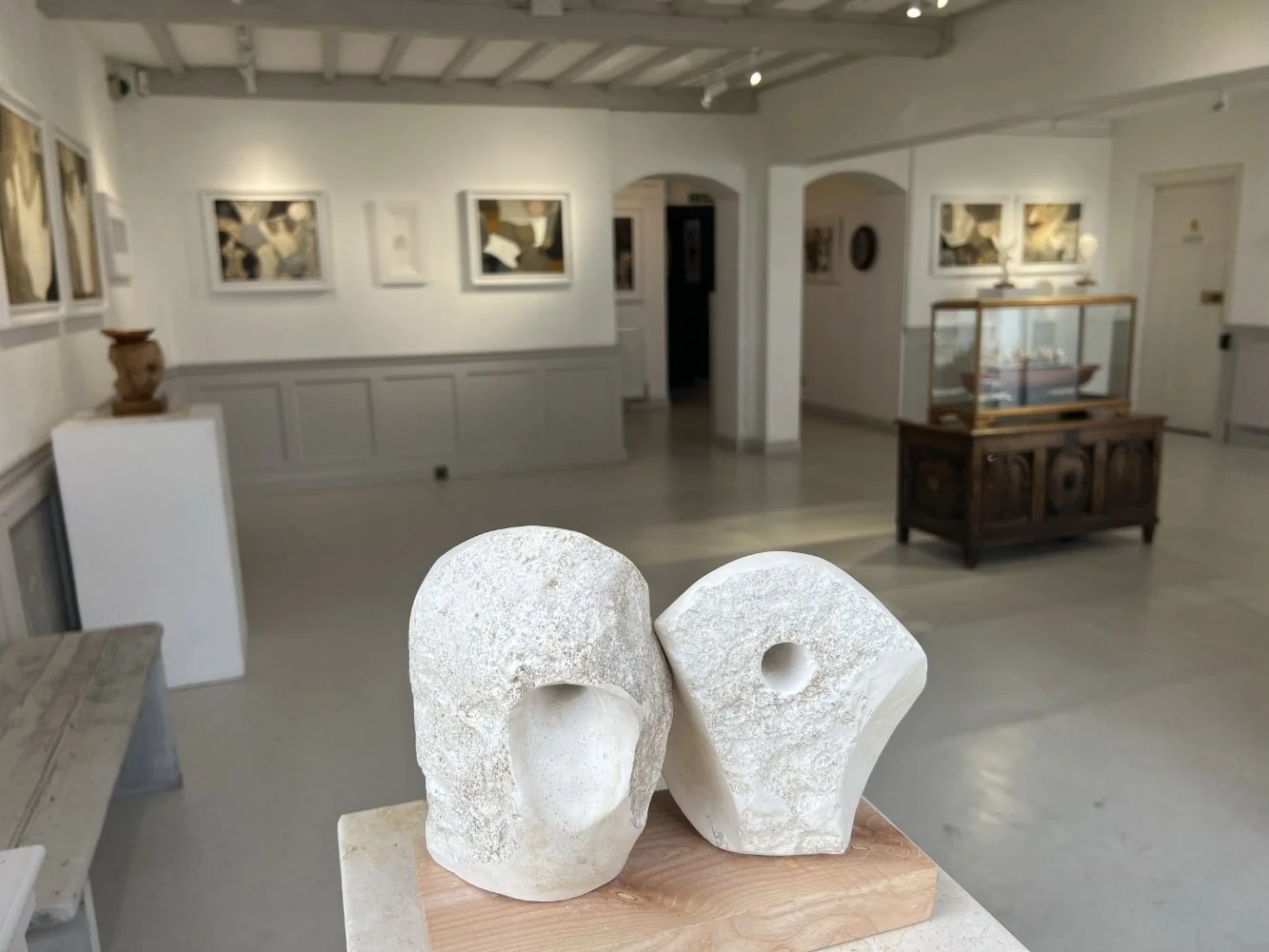
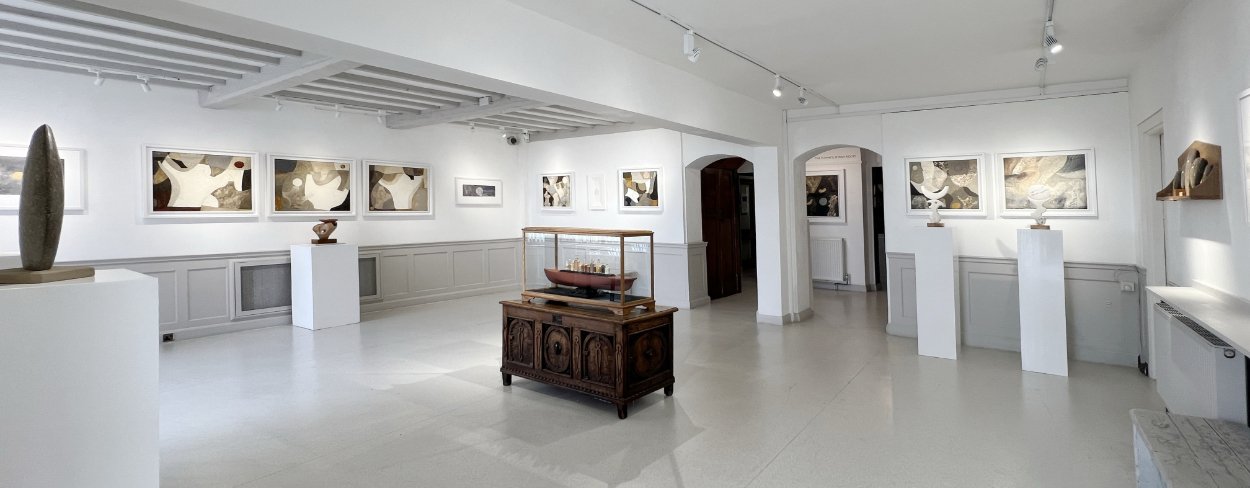
A Confluence of Elements alludes to the materiality and movements of place. The exhibition centres on a specific location in the Kentish countryside: a small hamlet in the parish of Newenden named Lossenham.
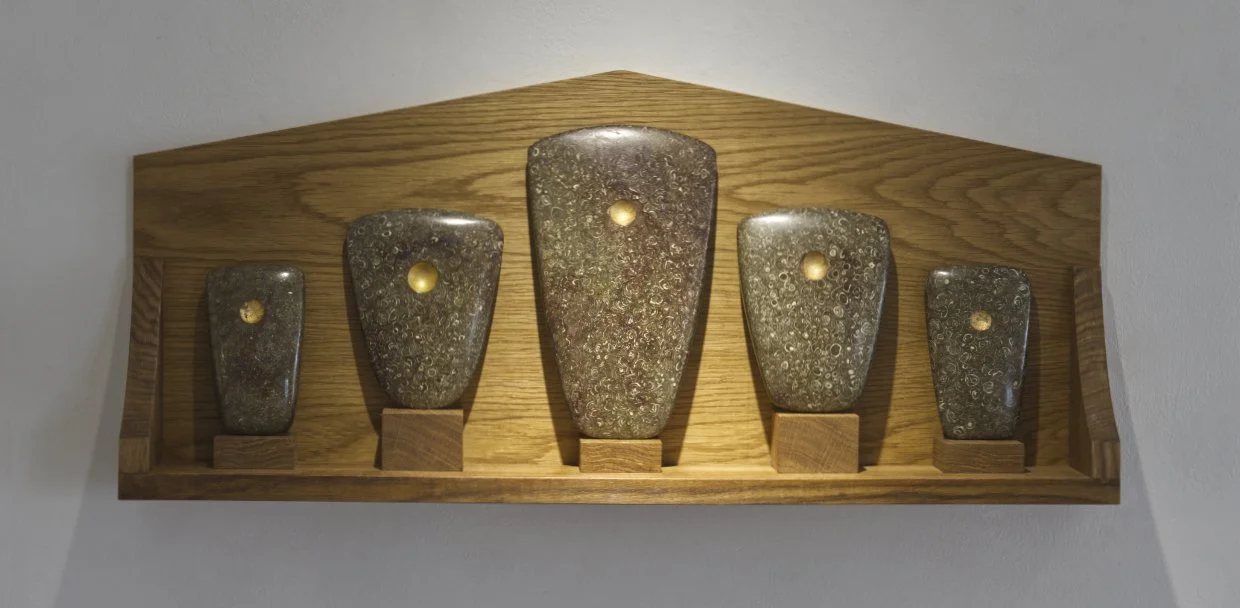
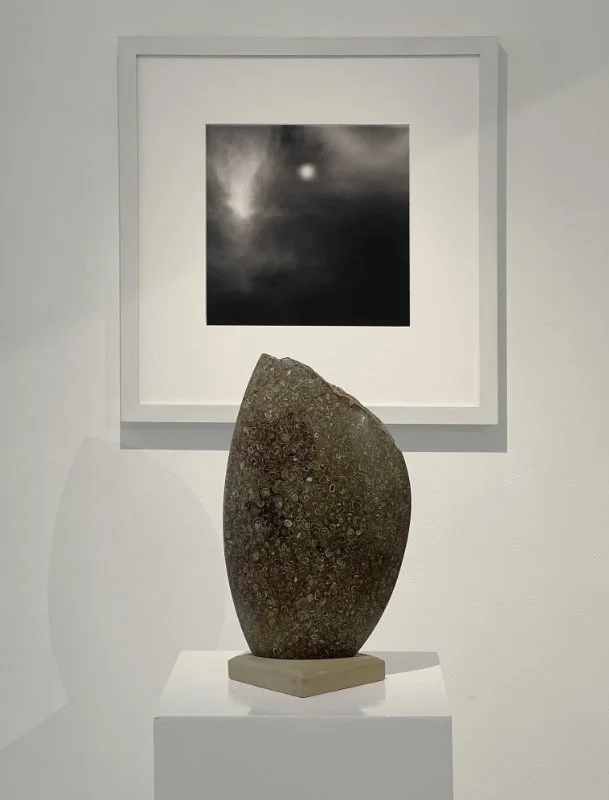
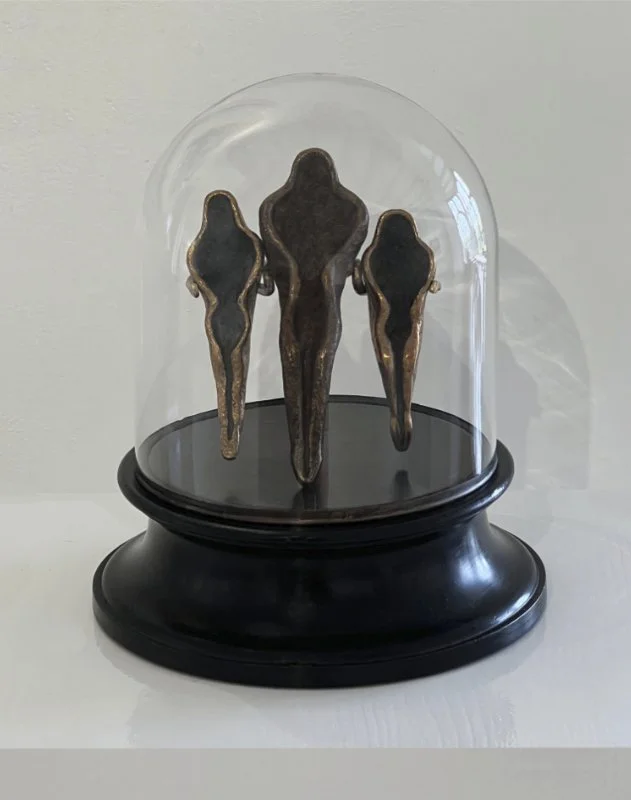
Russell’s work at Lossenham has explored a variety of mediums, starting with photography and writing, and progressing to field recordings, musical compositions, ceramics, and cameraless image-making. The film ‘Uncertain Boundaries’, created with Kit Warren during his residency, encompasses many of these aspects. However, the primary focus of his work shown at Rye Gallery delves into his process of foraging and isolating mineral colours from the landscape, alongside rare fossil-bearing stones gathered from Lossenham’s fields and honed into votive pieces; site-specific responses that utilise the very materials of the landscape.
Russell’s foraged mineral pigments were worked into paints and inks by Melvyn and they sourced wood which Melvyn used to fashion a violin bow, and play tonal passages that were in turn layered into a musical piece composed by Russell. Their combined work for A Confluence of Elements features a subtly shared visual language that alludes to both Carmelite and earlier human presence in the Lossenham landscape.
“I have been exploring the materiality and the sense of place in the Lossenham landscape. For me, it has been a place of hidden diversity, hidden in the sense that the simplicity of the environment that one initially encounters belies the profusion of detail that unfolds through closer observation. I could cite the wide range of pigment colours to be discovered in the clays, minerals, and iron oxides, the unexpected tapestry of sub-surface sounds within the ponds, and Lossenham can be such a visceral and intimate retreat, a place of seclusion and quietude that affords both time and space to contemplate one’s inner landscape and, over time, a sense of emptying out has naturally happened.”
The Lossenham minerals and clays, prospected and worked into an array of coloured pigments by Russell, have afforded Melvyn a vocabulary unique to the land. Colours ground fine, mixed with oil to produce paints and inks, the soul of place applied to canvas and board. Melvyn transmutes forms contained within his paintings and develops them into sculptural forms. The sculptures are carved from a natural resin plaster containing foraged Lossenham pigments, or from found wood on the landscape.
“The experience of working at Lossenham has been wonderful, the freedom to explore layers of geology and history, to handle foraged minerals and clays, and the opportunity to wander along new creative paths. The peace of the Lossenham landscape allows for inner contemplation; sensations within can take precedence over a figurative portrayal of nature. The notion arises that an accumulated history has an energy, a stored charge within the deposits of soil, sands, clays, and iron; part of the materiality of each pigment foraged from the ground is different, and therefore each pigment influences and guides the form of the resulting painting.”
Melvyn’s painting and sculptural motifs and forms are inspired by the presence of the Carmelite Priory at Lossenham, the land as a meditative and contemplative place, the ancient concept of votive pools as sites of offering or portals to another realm.
Towards the end of 2025, Terry Hulf, a long-standing friend of the late Fay Godwin, was invited to capture large-format photographs of Lossenham. Some of his winter and early spring images from many early morning visits have been included in the exhibition; his strict, self-imposed rules of engagement offer a wonderfully raw and unfiltered representation of place as his eye finds it.
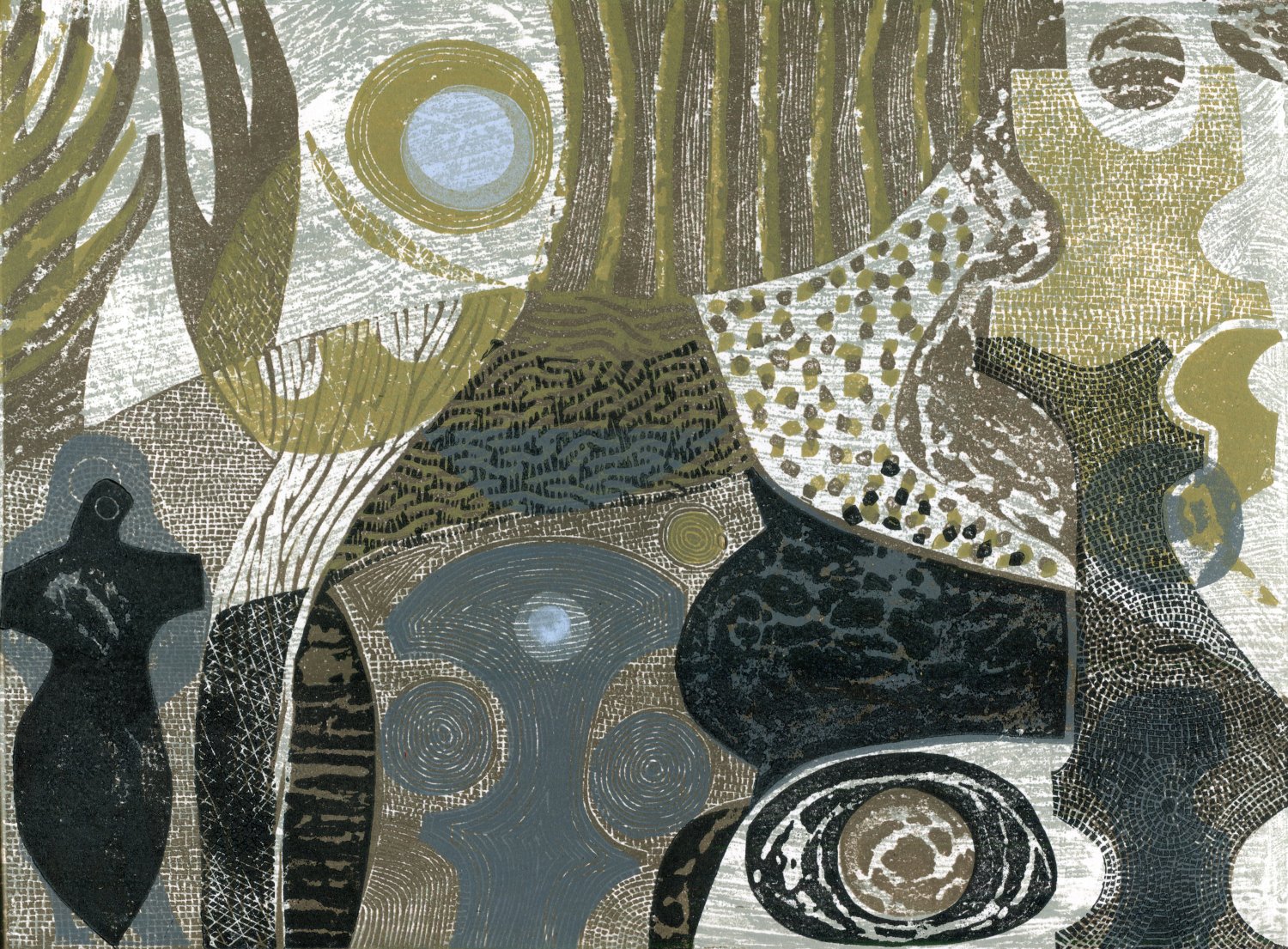
Eclipse Figure
Six colour linocut print.
2025/26
Hand Printed on Somerset Satin handmade paper 300gsm
Print image size 30x40cm
Edition size 16
Printing inks made from prospected Lossenham pigments: Carbonised kiln clay, Sediment clay, Wadhurst shale clay, Ferricrust, Black iron oxide
£325 Unframed
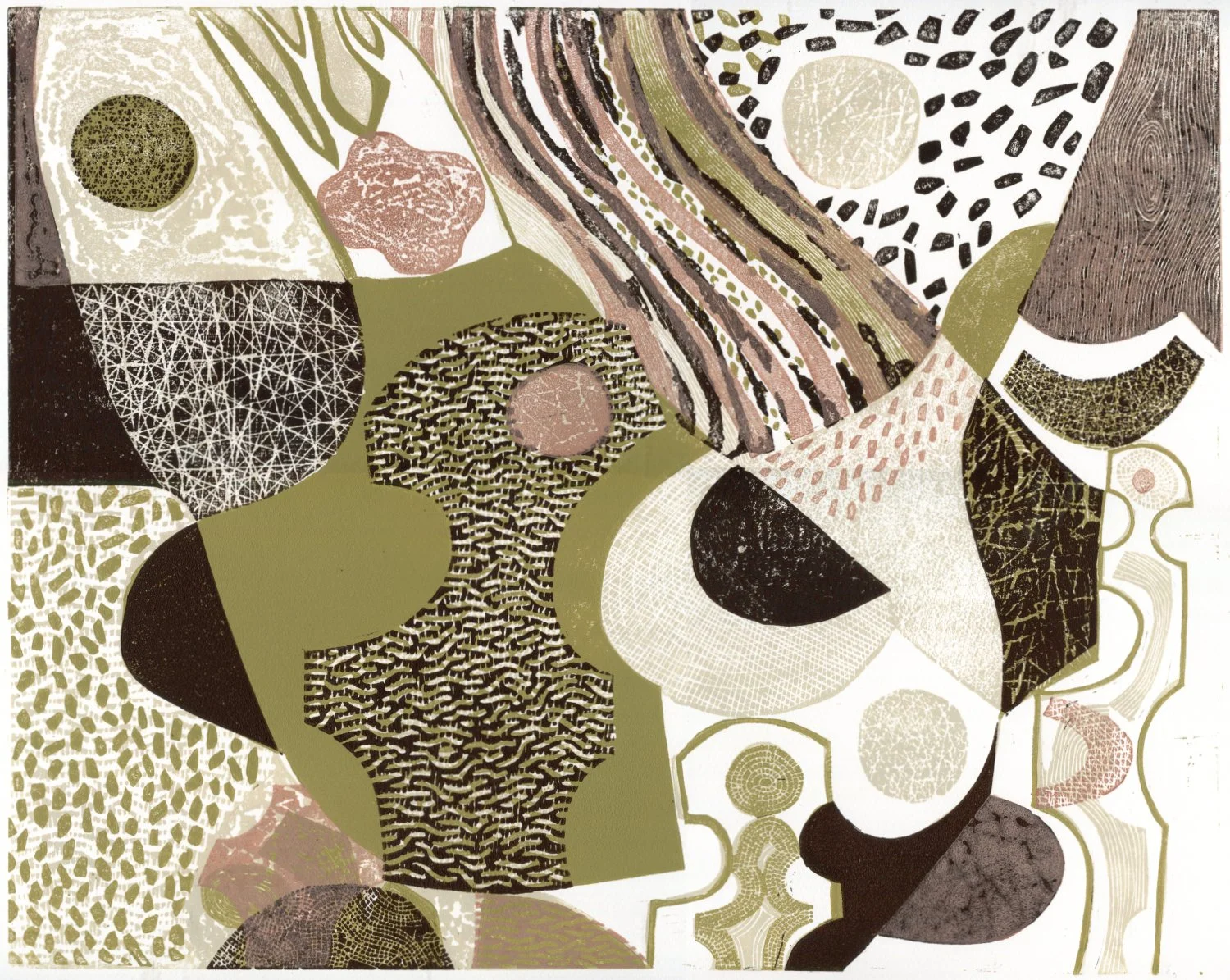
Reflections of an Ancient Land
Six colour Linocut print
2025/26
Hand Printed on Somerset Satin handmade paper 300gsm
Print image size 40x50cm
Edition size 10
Printing inks made from prospected Lossenham pigments: Sederitic shale clay, Black iron oxide, Manganese dioxide, Phosphatic clay, Wadhurst shale clay, Carbonised kiln clay, Ferricrust , Red palaesol , Roasted hemetite
£375 Unframed
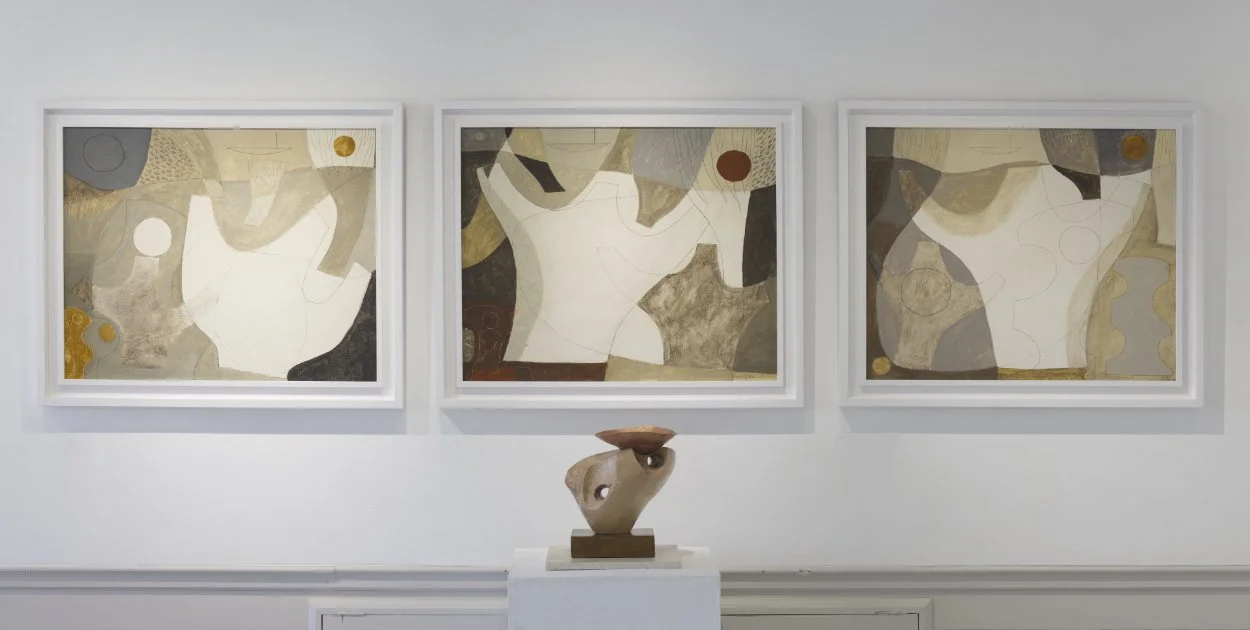
Triptych - Three painted panels
Anglo Saxon poem ‘The Dream of the Rood’. Symbolism of the Ancient tree in the pre christian and early Christian world, life, compassion, stability, wisdom and continuity.
The white base of the paintings is a Priory chalk ground, made from the off cuts of chalk carved from the sculpture ’Altar Stones’. Chalk is not normally found in the Lossenham locality and as it was found near the priory could have been used as a white pigment used in early medieval church frescoes.
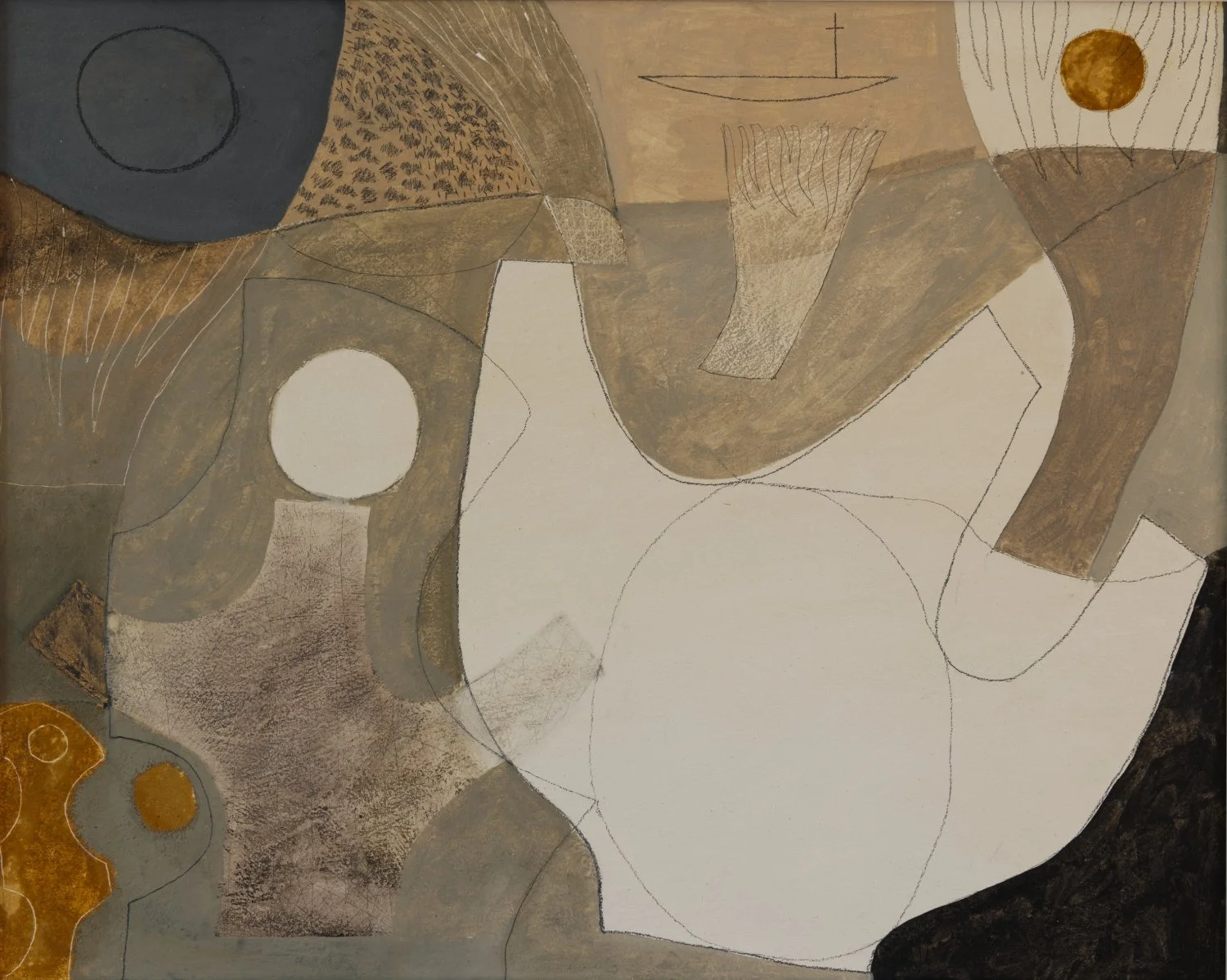
The Song of the Rood- panel I
Priory chalk ground - chalk sourced from Lossenham Priory combined with a natural glue.
Oil paint composed of Prospected Lossenham mineral pigments: Sedritic shale clay, manganese dioxide, lignin black, mottled red paleosol, lake clay.
Oil, graphite and chalk scratched relief
Painting size 61x77cm
Framed size 73x88cm
£2750
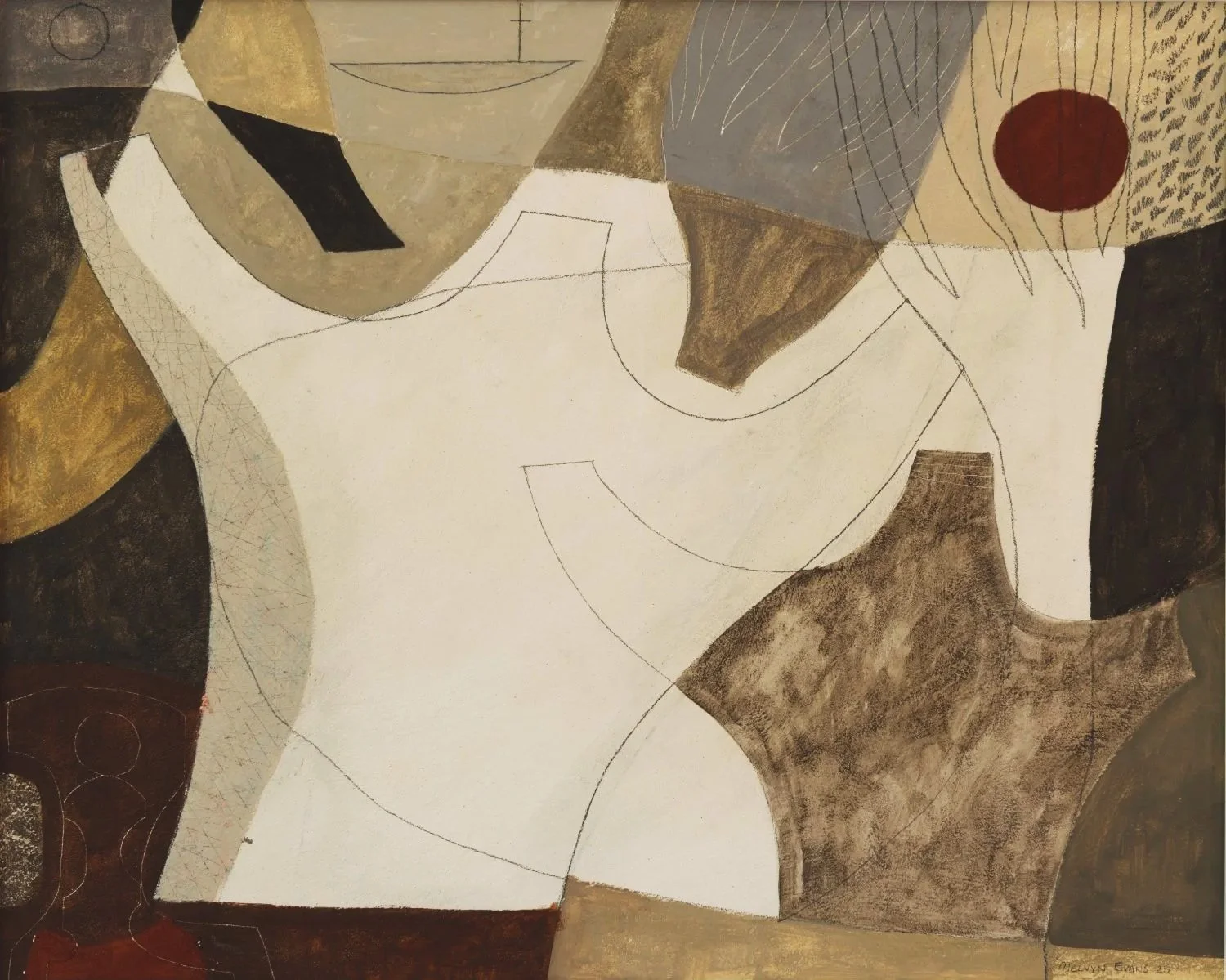
The Song of the Rood- panel II
Priory chalk ground - chalk sourced from Lossenham Priory combined with a natural glue.
Oil paint composed of Prospected Lossenham mineral pigments: Lignin black, phosphatic clay, Wadhurst shale, sediment clay, mixed lake sample
Oil, graphite and chalk scratched relief
Painting size 61x77cm
Framed size 73x88cm
£2750
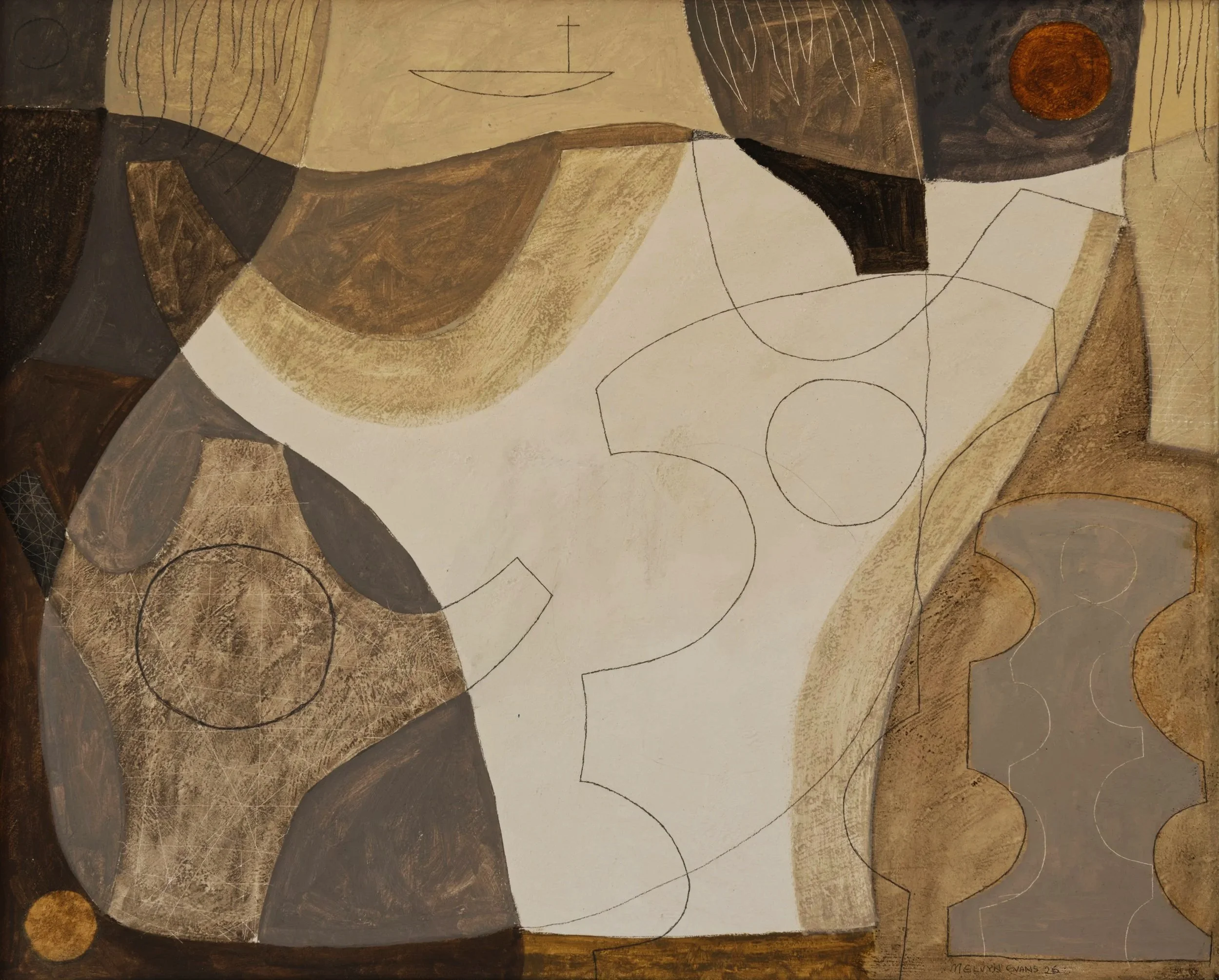
The songs of the Rood- panel III
Priory chalk ground - chalk sourced from Lossenham Priory combined with a natural glue.
Oil paint composed of Prospected Lossenham mineral pigments: Sediment clay, lake clay, carbonised kiln clay, cederitic shale clay, ferricrust.
Oil, graphite and chalk scratched relief.
Painting size 61x77cm
Framed size 73x88cm
£2750
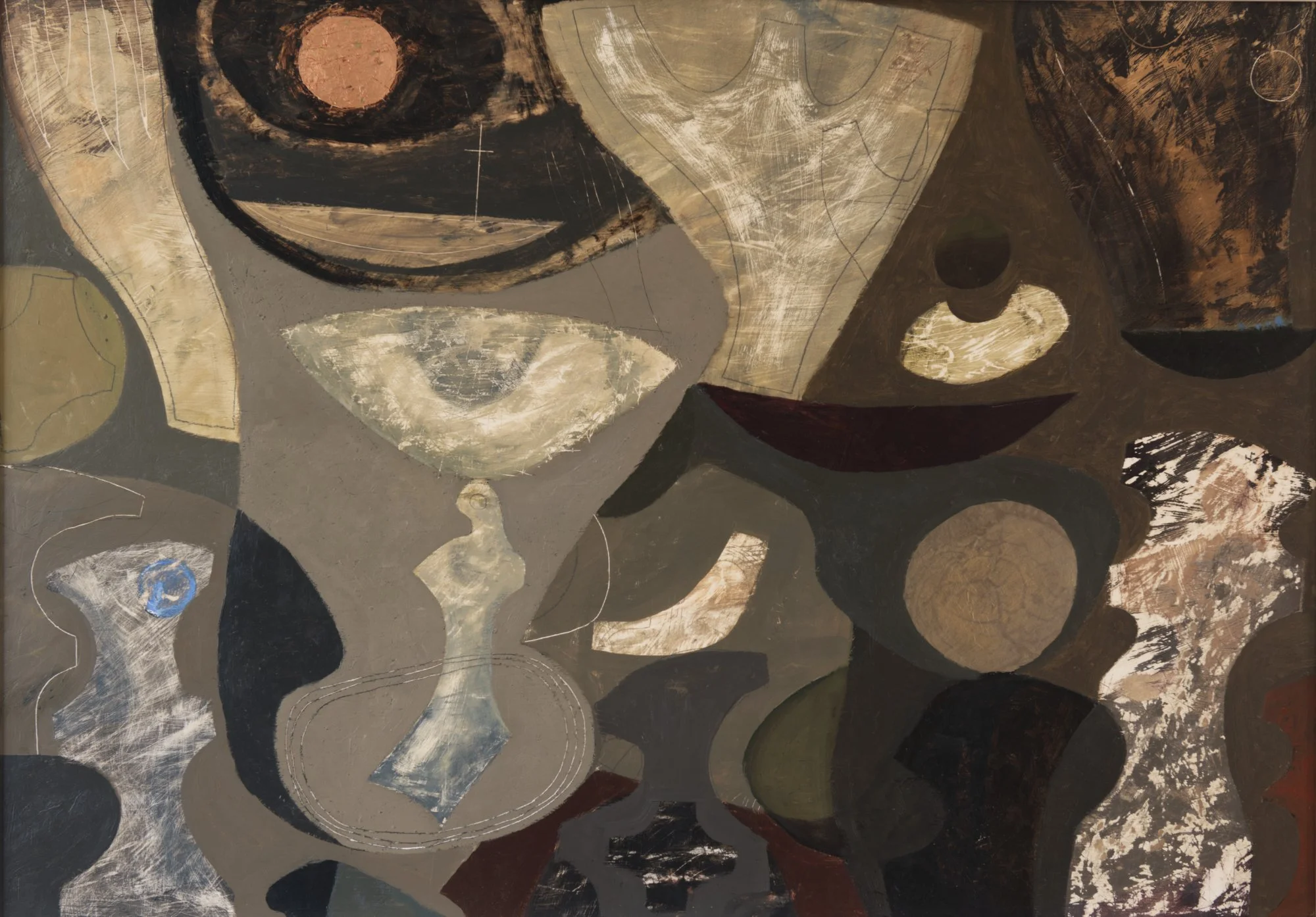
The vital energy of balanced forms
Painting board size 100x70cm
2025/26
Oil, graphite, copper and metal leaf laid on Lossenham chalk ground
Lossenham prospected mineral pigments: Sederitic shale clay, Black iron oxide, Manganese dioxide, Phosphatic clay, Wadhurst shale clay, Carbonised kiln clay, Ferricrust, Red palaesol, Roasted hematite
£3750
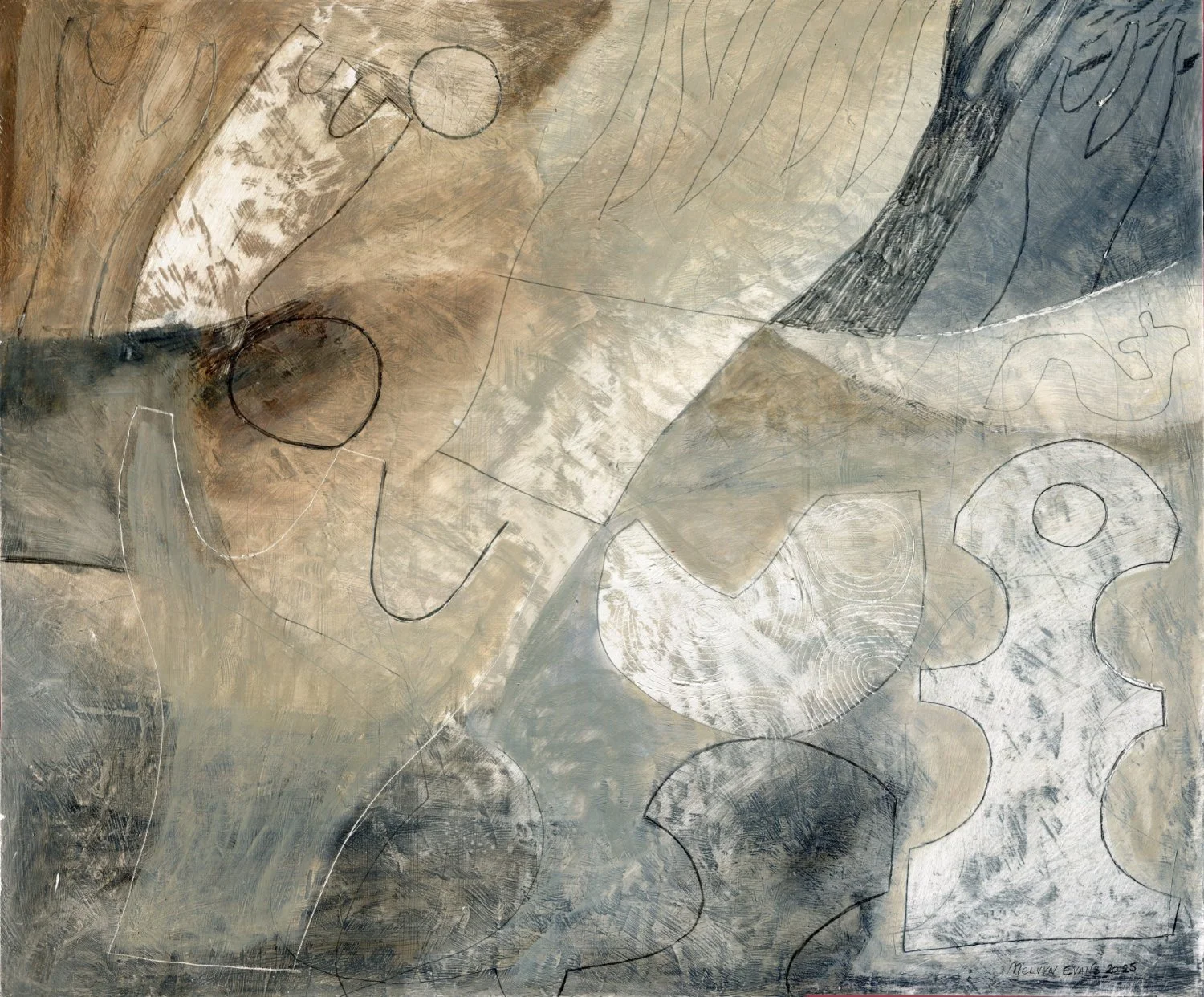
Hidden Land
Painting board size 50x60cm
2025/26
Oil and graphite laid on Lossenham chalk ground
Lossenham prospected mineral pigments: Sediment clay, Carbonised kiln clay, Roasted hematite, Black iron oxide, Wadhurst shale lake clay
£1950
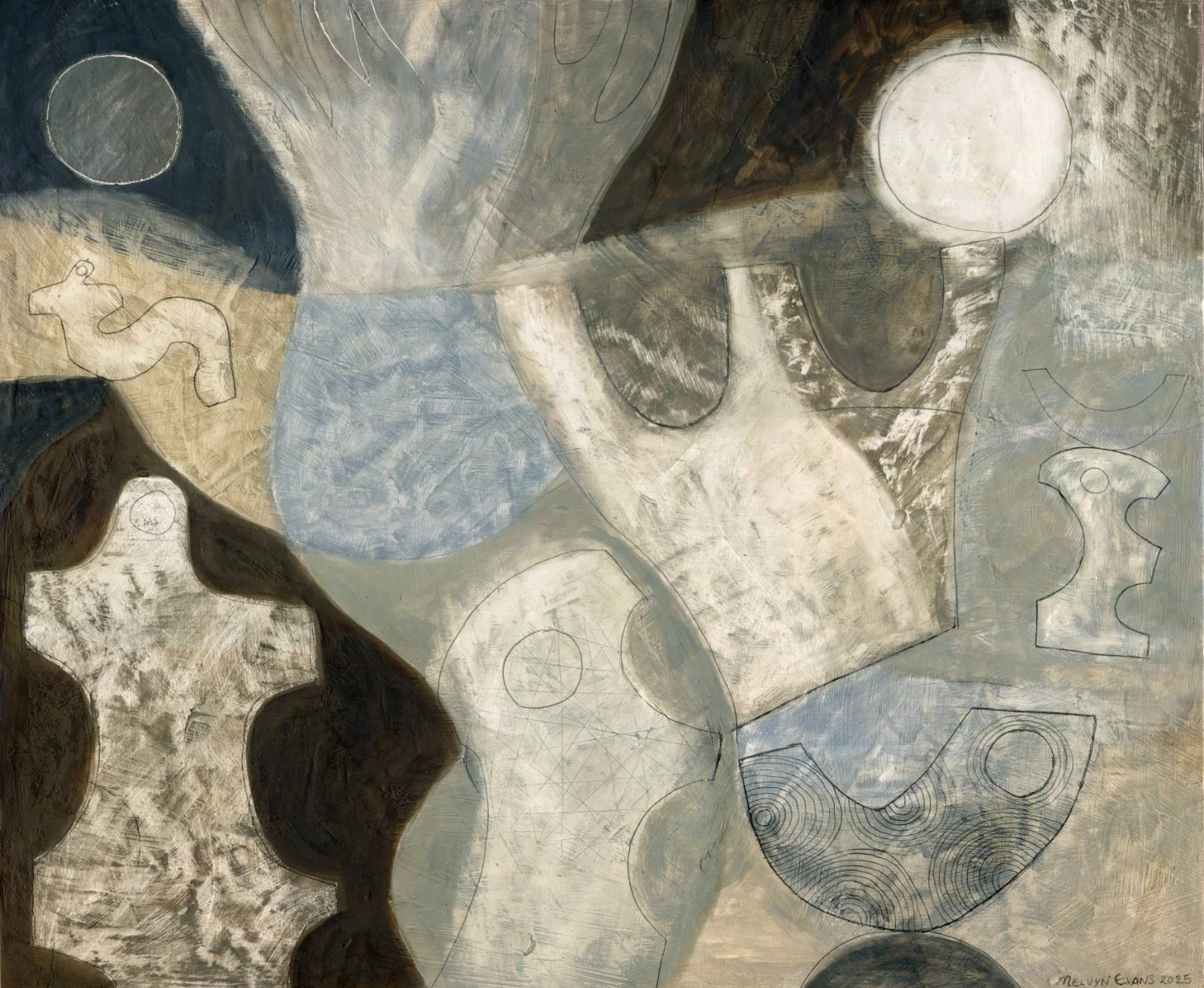
Moon Portal
Painting board size 50x60cm
Oil and graphite laid on Lossenham chalk ground
Lossenham prospected mineral pigments: Lignin black ha ha trench, Black iron oxide, Wadhurst shale, Ferricrust, Sediment clay
£1950
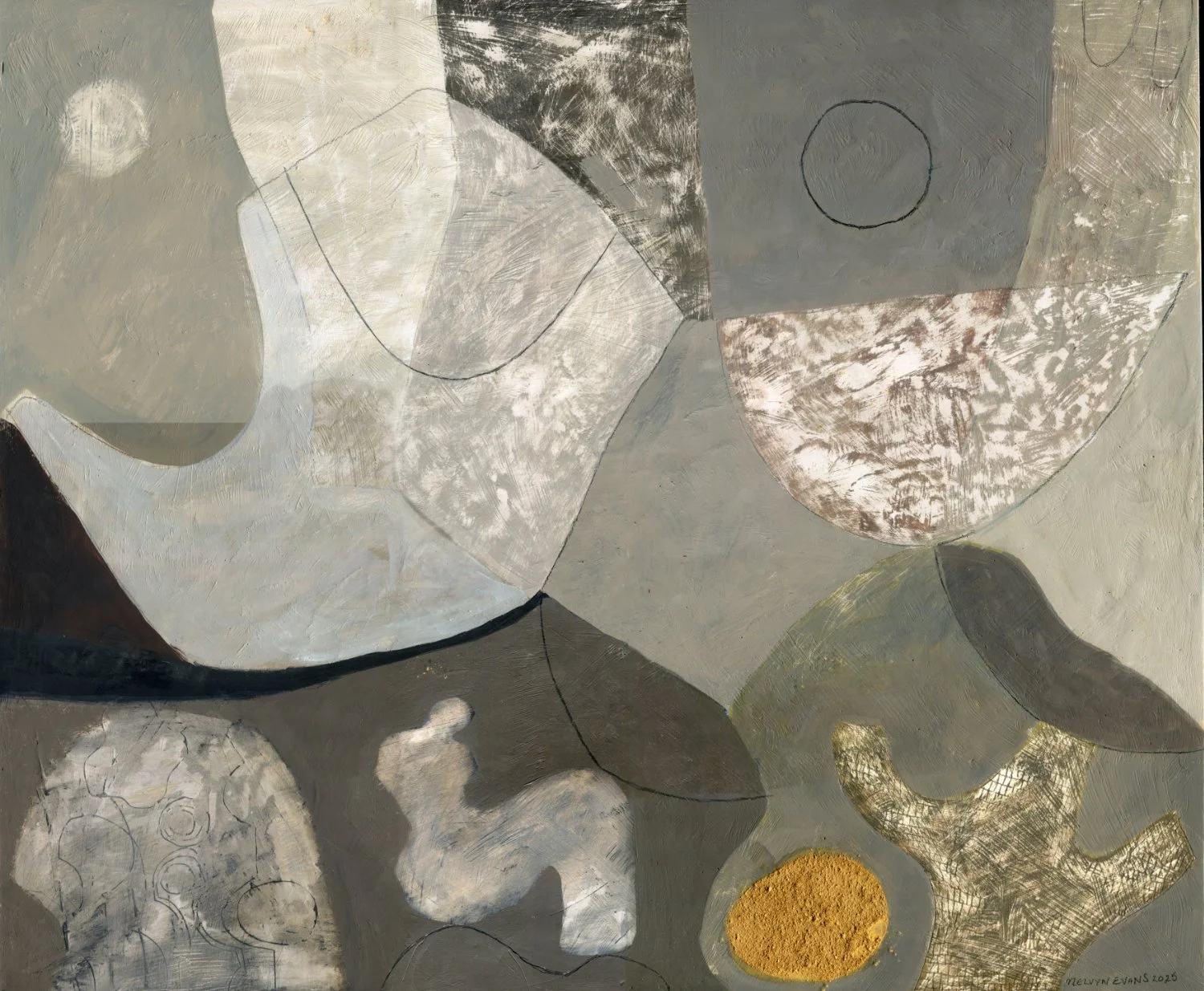
This Ancient Land
Painting size 50x60cm
Oil, graphite, laid on Lossenham chalk ground.
Lossenham prospected mineral pigments: Mixed sample lake clay, Lignin black ha ha trench, Red palaesol ha ha trench, Phosphatic clay, Phosphatic clay, Wadhurst shale clay, Ferricrust
£1950
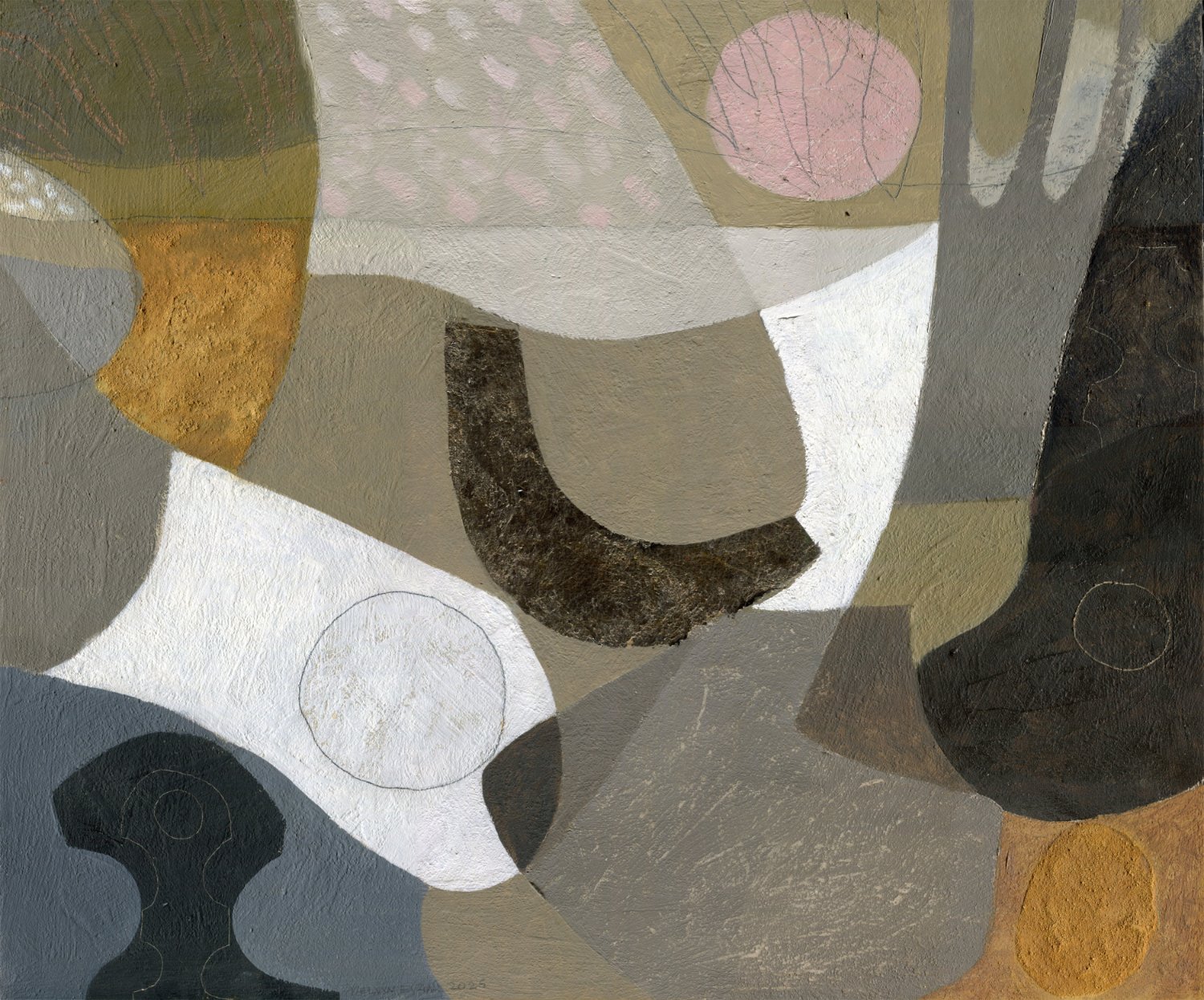
Forms of Reflection
Painting size 50x60cm
Oil, graphite and patinated bronze leaf laid on Lossenham pigments mixed with a natural glue to form a ground,
Lossenham foraged mineral pigments: Carbonised kiln clay, Mixed sample, lake clay, Sediment clay, Phosphatic clay, Lignin black ha ha trench
£1950
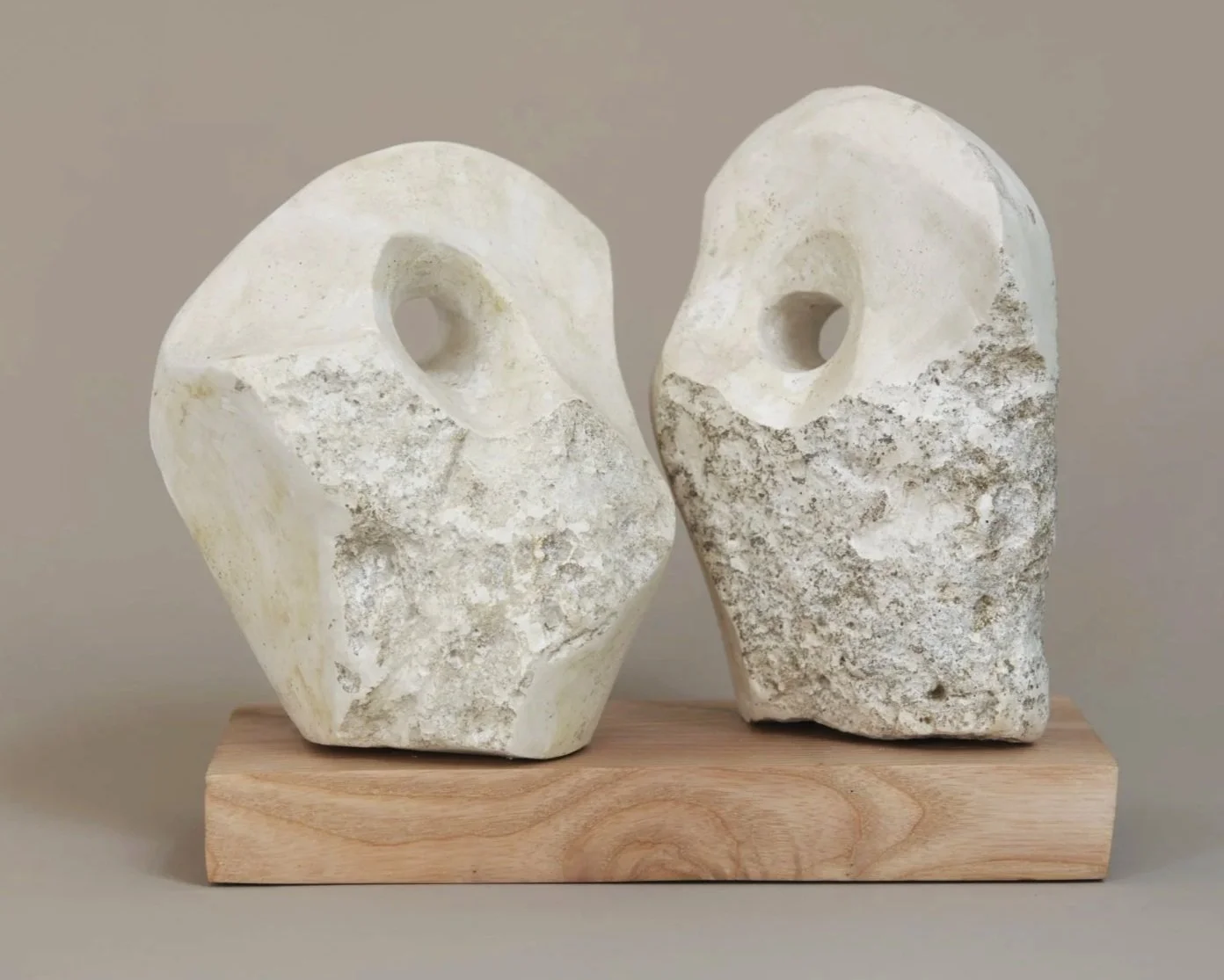
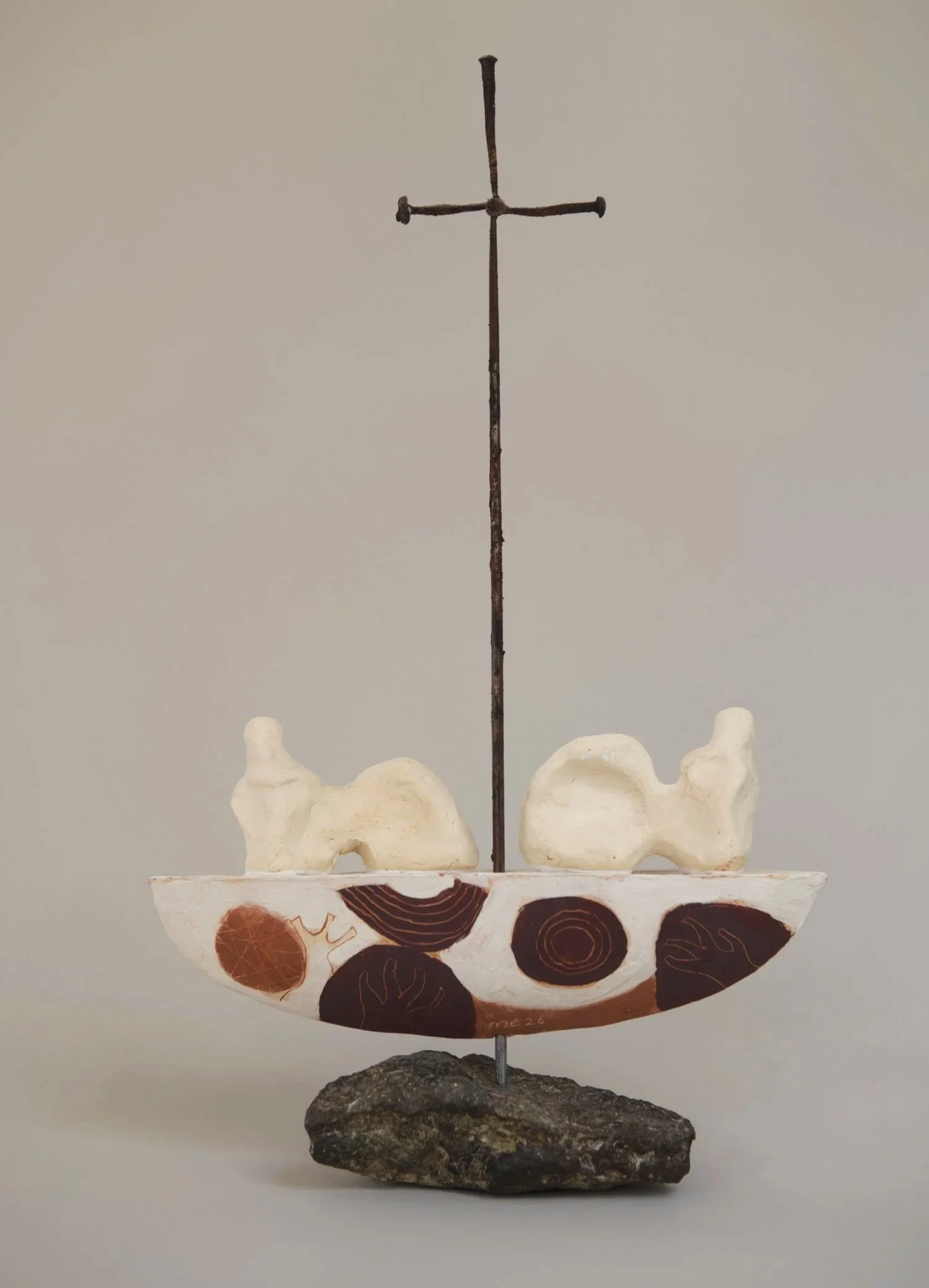
Altar Stones
Lossenham priory chalk stones, Lossenham Ash plinth
Chalk sourced from the Carmelite Priory at Lossenham.
Chalk is not unusual found in the locality of Lossenham. It could possibly have been imported for a purpose. Lossenham has ancient iron works, chalk could have been used as a flux material for iron smelting. It could also have been used as a white pigment in early medieval church frescoes.
NFS
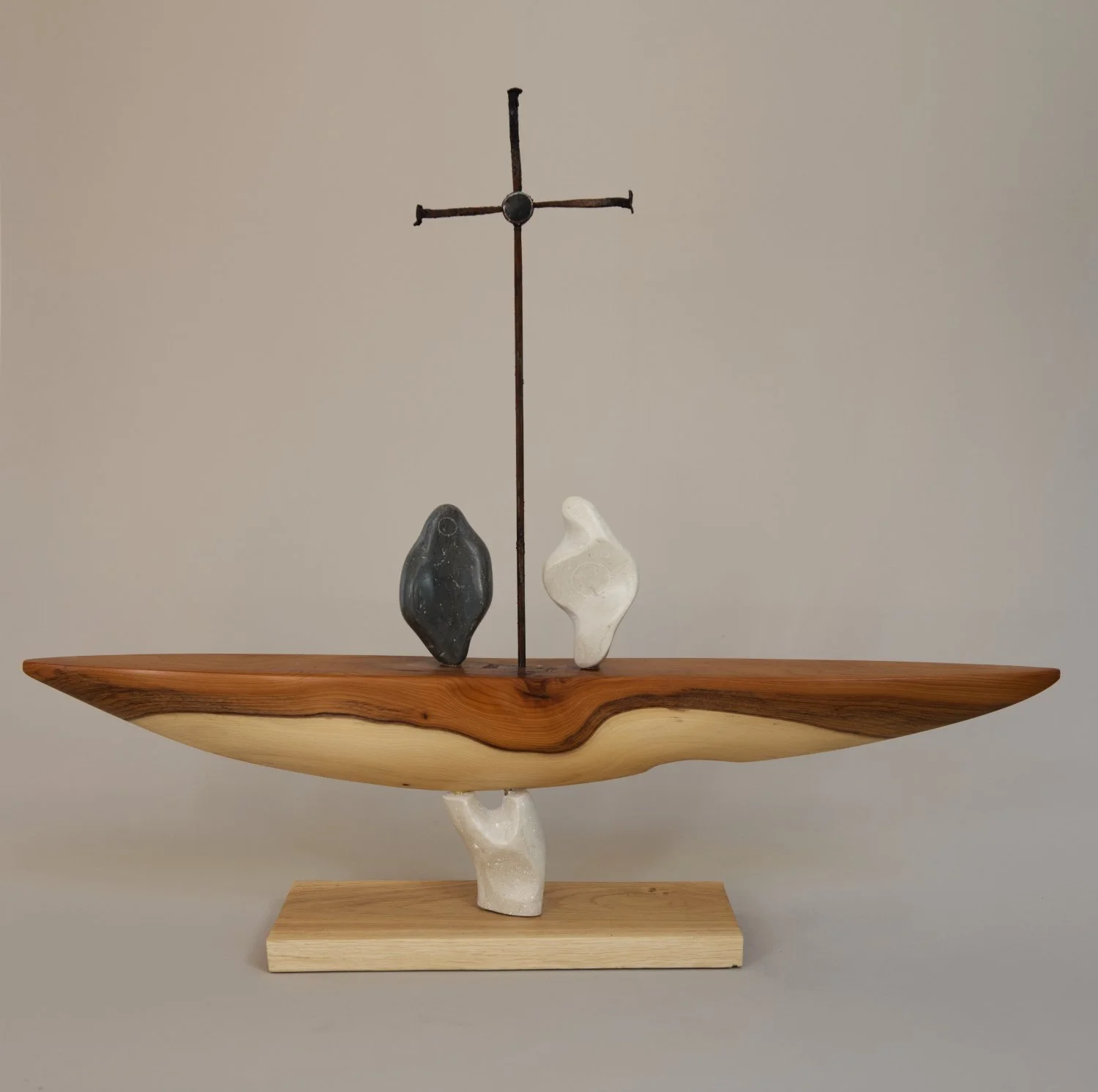
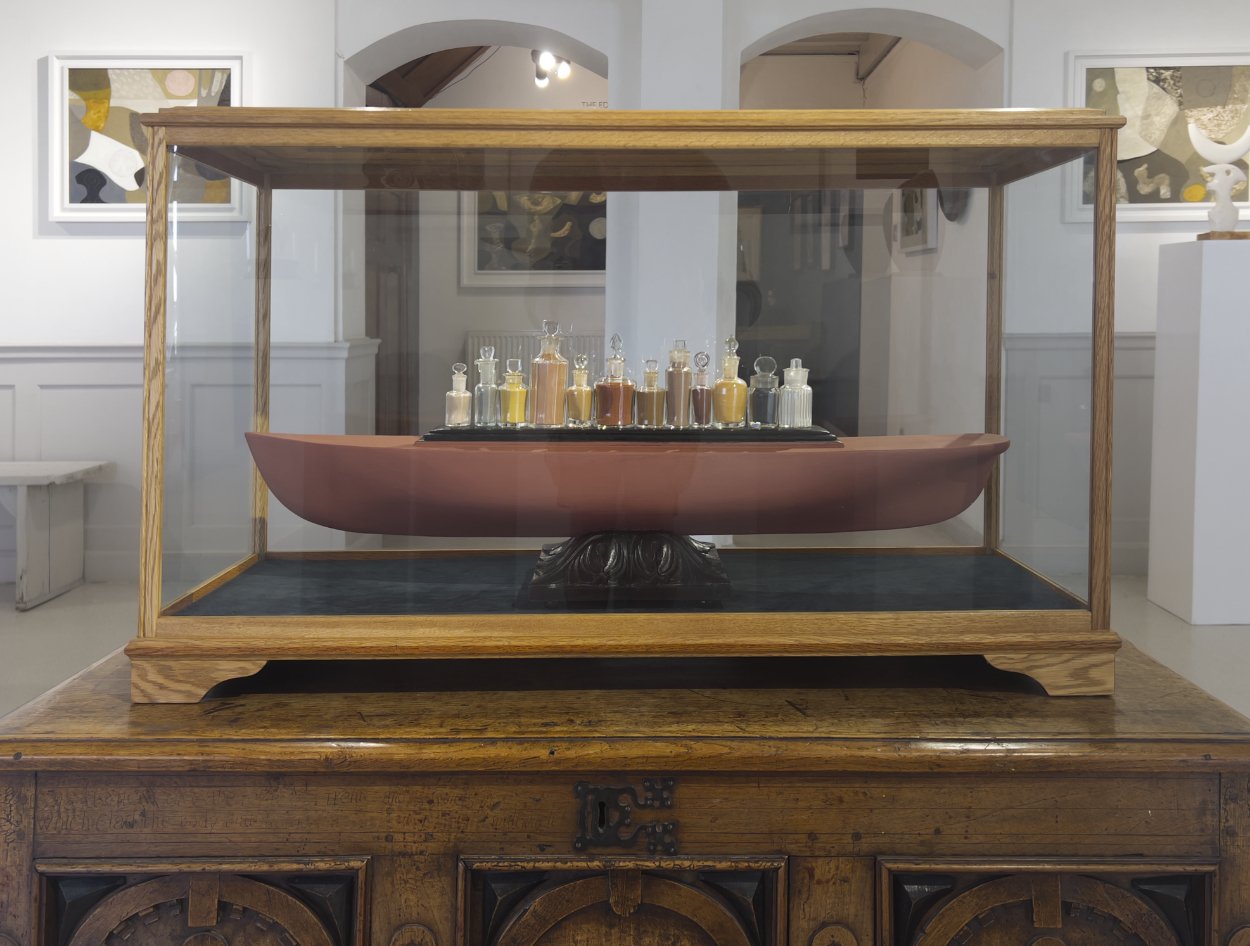
Arrival
2025/26
Lossenham clay, iron stone, iron rod, ancient nails
Arrival of the Carmelite founders by boat along the river Rother.
£1500
Seafarers/Arrival II
2025/26
Yew, resin plaster, Lossenham prospected pigments, iron rod, ancient nails, Lossenham ash plinth
Yew - Symbol of ancient sacred rites and rituals
Iron - nails of Christ
Forms - Lossenham carbonised kiln pigment, Priory chalk, natural resin
£3500
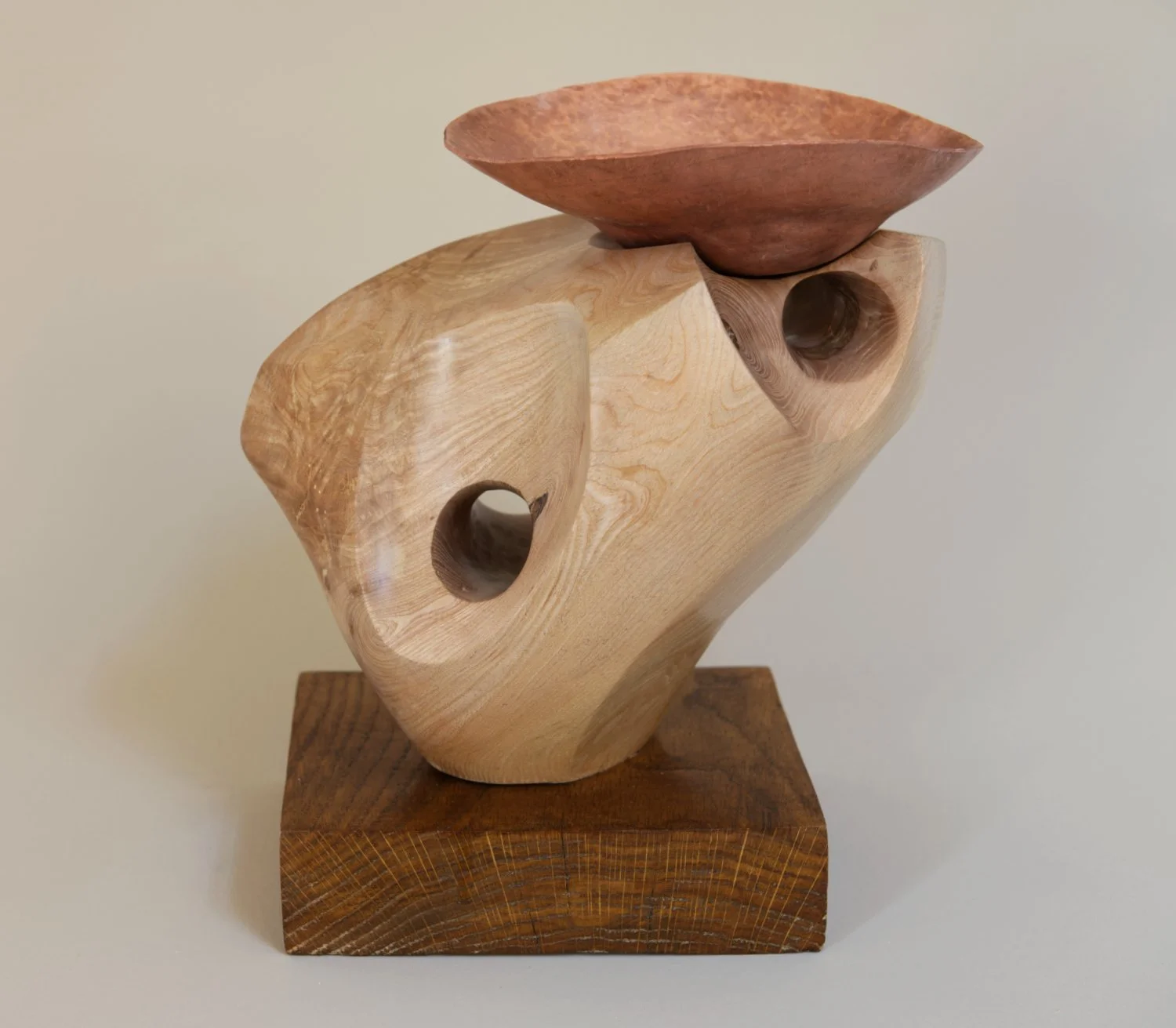
Font
Lossenham ash or elm, hammered copper bowl by Alison Evans containing votive bird form byRussell Burden.
Oak plinth
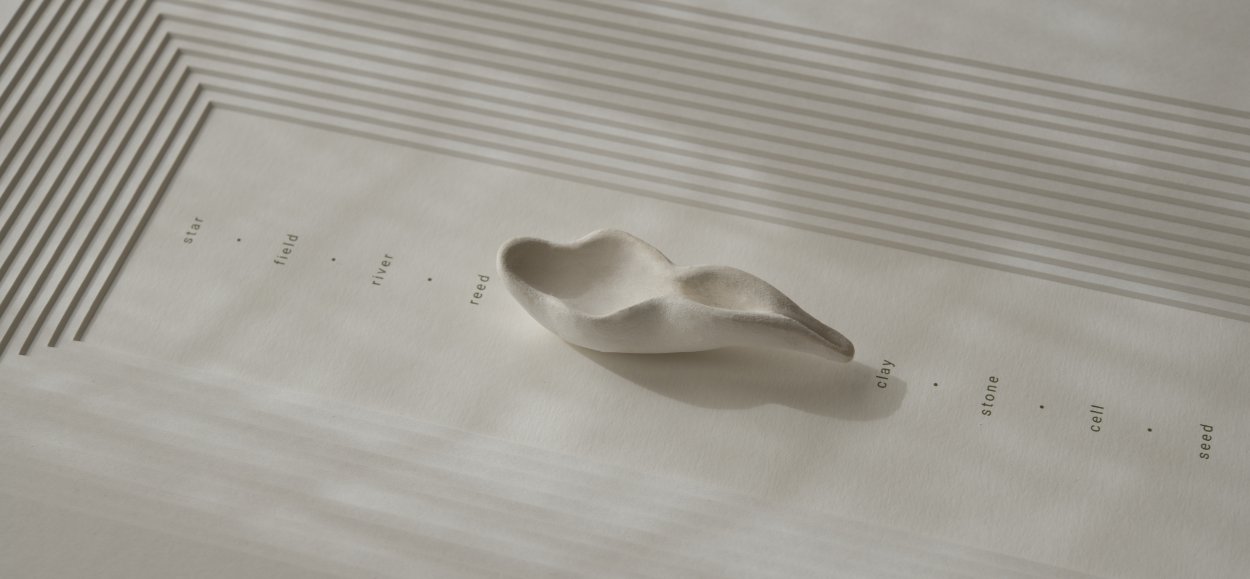
Font as a connection to the Carmelite Priory, font as a vessel holding water, a votive pool in which the act of giving facilitates our receiving. A vessel within a vessel.
£3750
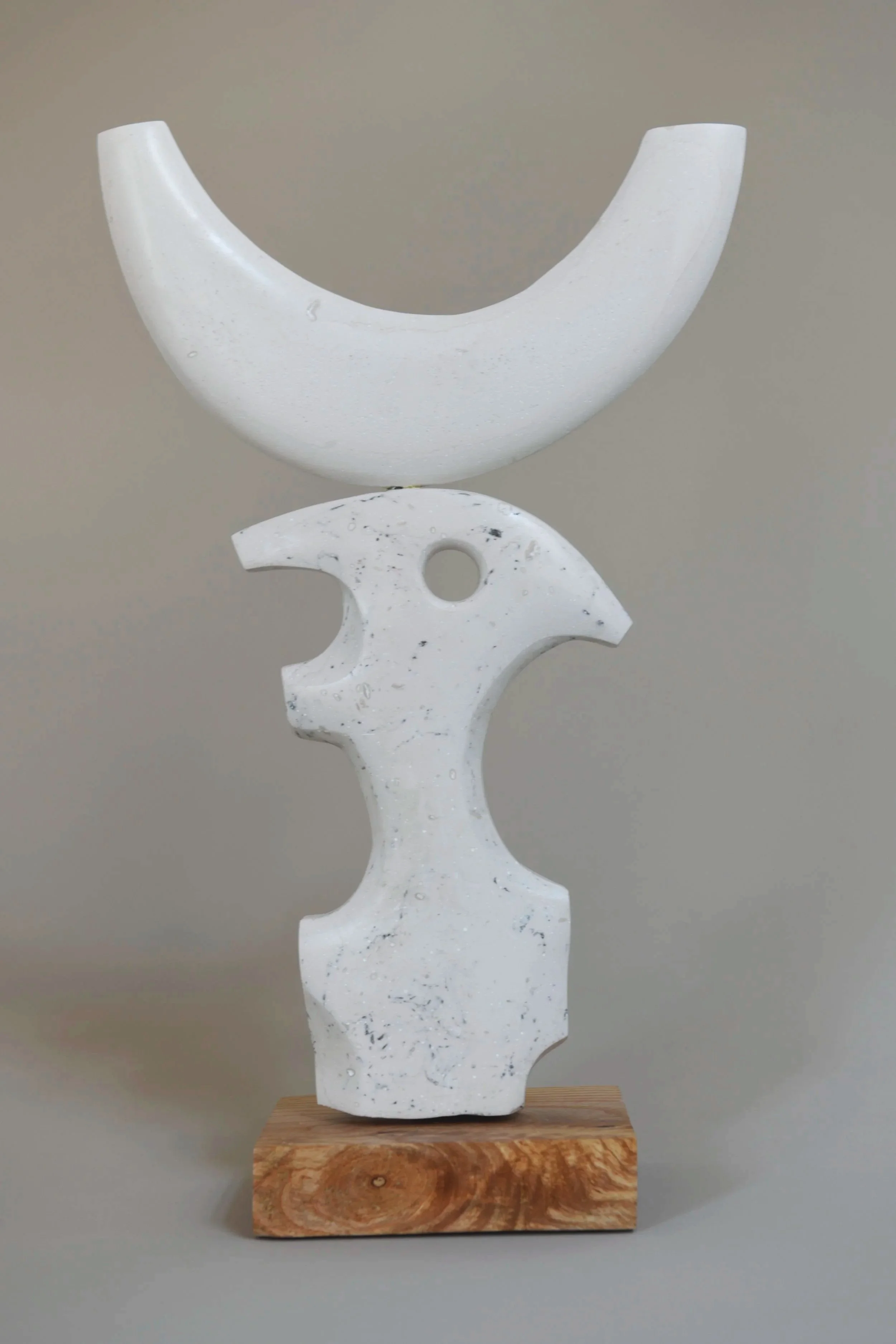
Moon Totem
2025/26
Resin plaster, Lossenham prospected pigment.
Lossenham beech plinth
A stacked totemic power, conversation with magic stones. Two joined forms poised tantalisingly between perfect balance and precarious off centre asymmetry.
£2000
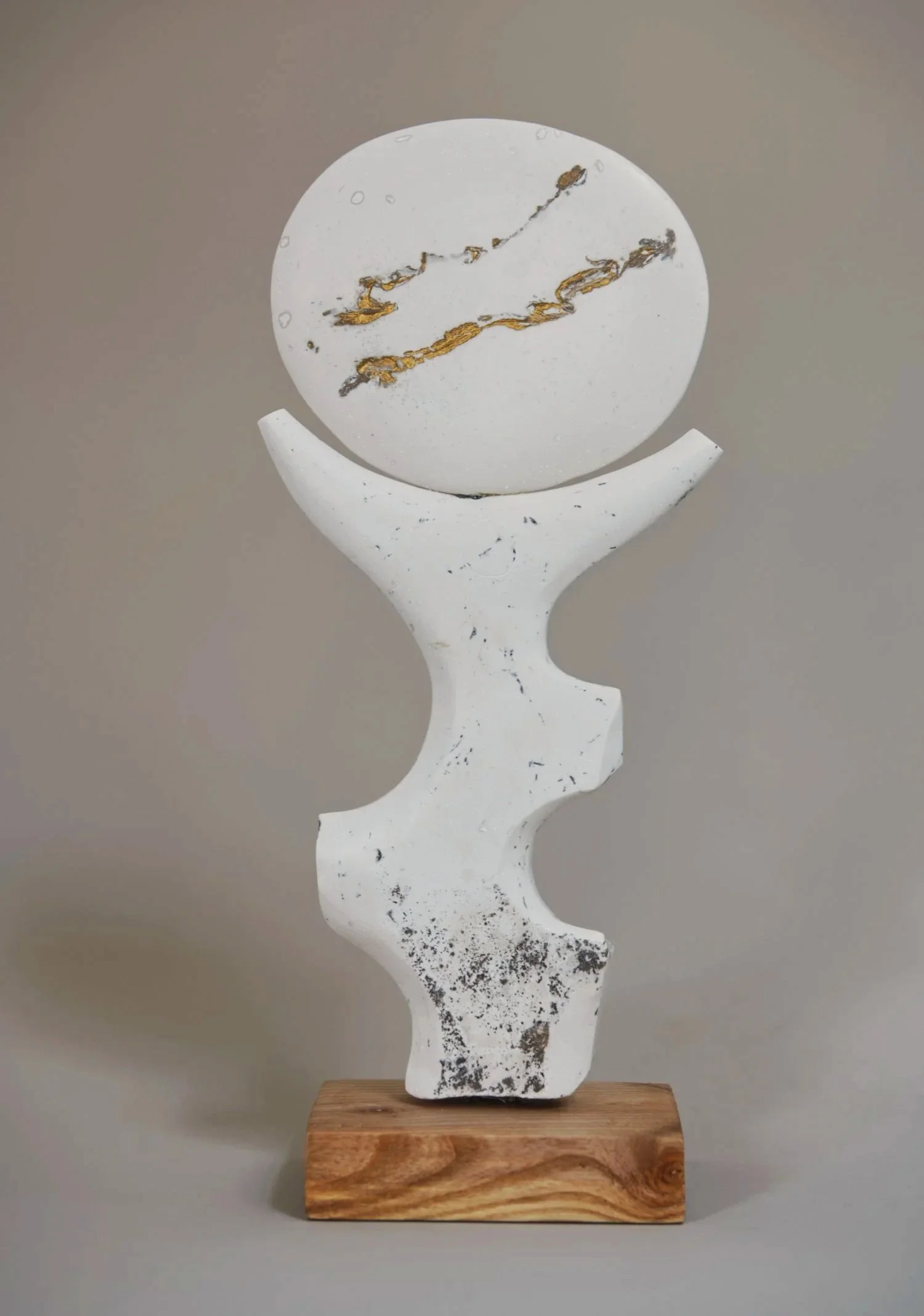
Sun Totem
2025/26
Resin plaster, Lossenham prospected pigment, 18ct gold Leaf,
Lossenham Beech plinth.
The Stacked totemic power of a sun disc rising above the tree or cross form identifying with the sun alignment of a megalithic menhir.
£2000
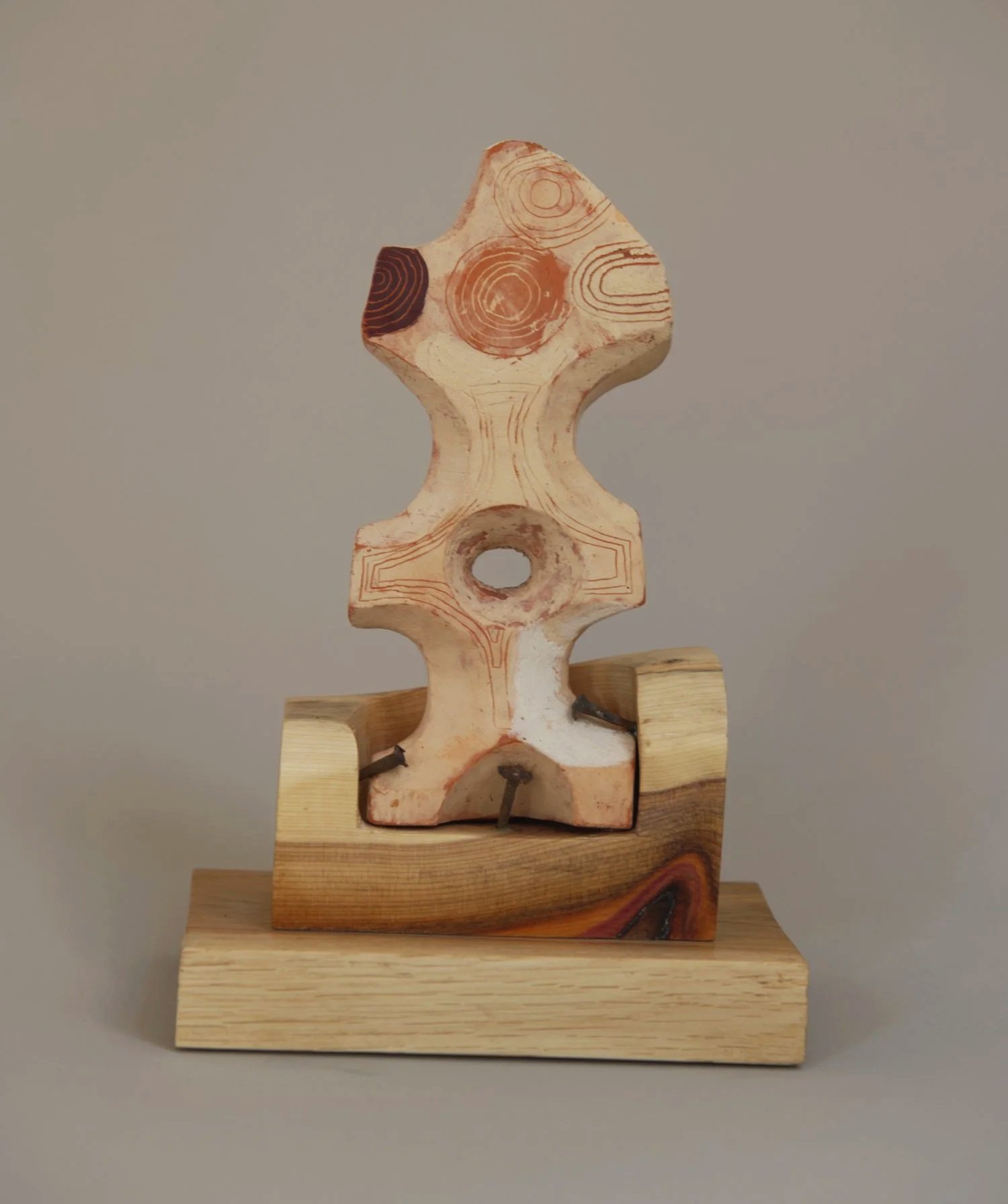
Sentinel /Upright cross motive
Lossenham clay, yew, ancient nails,
Lossenham ash plinth.
Founding of the Carmelite Priory at Lossenham.
Lossenham clay - Amulet cross form.
Three ancient iron nails - Iron Age Iron smelting at Lossenham - the three nails of Christ.
£800
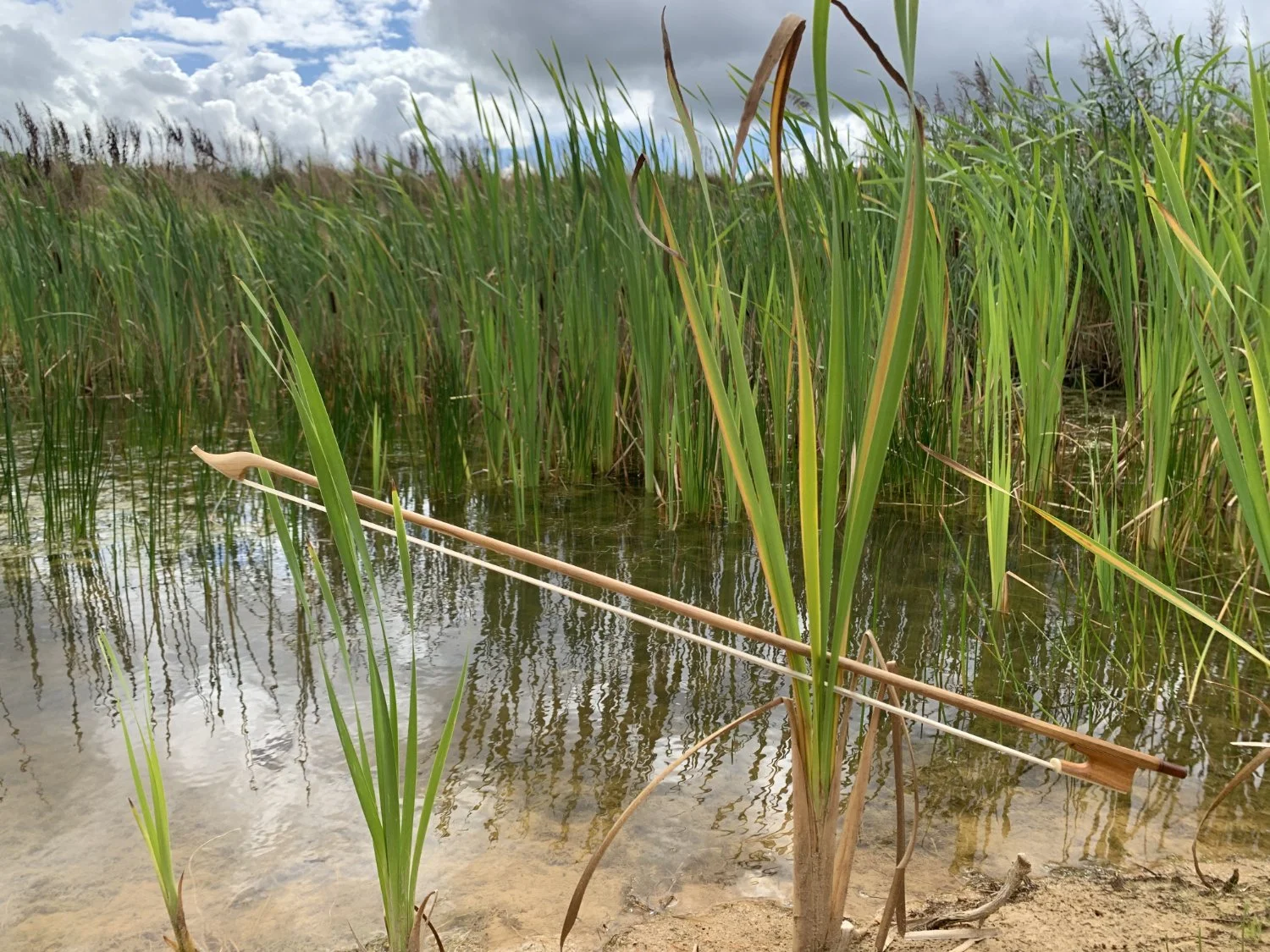
Lossenham Violin Bow
Yew, cherry, rosewood root, Ox bone, horse hair.
Bow length 69.5cm
Bow weight. 35g
The bow composed of woods sourced at Lossenham produces a unique sound, the sound of Lossenham.
The Lossenham Bow - contributes to a hydrophonic sound piece Beyond the rush of air composed by Russell Burden, bow notes played by Melvyn Evans
The bow stick is made from yew, an ancient spiritual wood harking back to early Christian and pre-christian rites.
The bow frog is the fruit wood cherry, sourced from managed log stacks at Lossenham, with a tip faceplate and frog faceplate of bone.
Although baroque bows rarely have faceplates in this instance it protects the brittle yew tip, also the Lossenham violin bow frog is made from cherry wood faced with a bone plate to afford it more strength. Bow adjuster rosewood root.